


Medically reviewed and authored by Larry M. Wolford, DMD — Board-Certified Oral & Maxillofacial Surgeon, Dallas, TX. Last reviewed: June 2026.
Cleft lip and cleft palate are among the most common congenital differences, occurring when the tissues that form the lip and the roof of the mouth do not fully join during early development. While the initial repairs happen in infancy, caring for a cleft is not a single operation — it is a journey that unfolds across childhood, adolescence, and sometimes into adulthood, guided by a team of specialists working together over many years.
What Cleft Lip and Palate Are
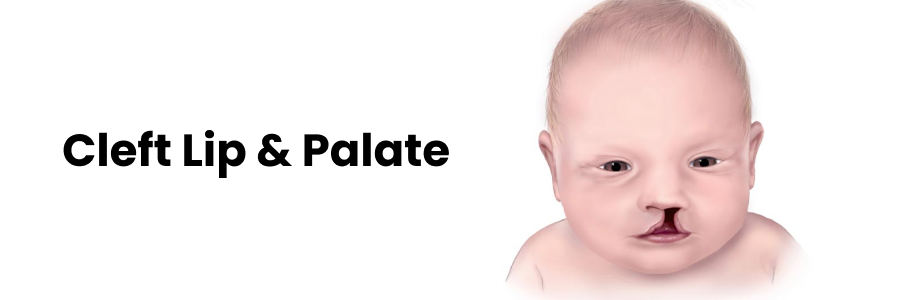
A cleft lip is an opening or split in the upper lip, which can range from a small notch to a gap that extends up to the nose. A cleft palate is an opening in the roof of the mouth, which can involve the hard palate, the soft palate, or both. The two conditions can occur separately or together, on one or both sides. Beyond appearance, clefts can affect feeding in infancy, speech development, hearing, and the alignment of the teeth and jaws as a child grows — which is why comprehensive, coordinated care matters so much.
A Team-Based Approach
Because a cleft touches so many areas, the best care comes from a multidisciplinary team. Depending on the child’s needs, this team may include a surgeon, an orthodontist, a speech-language pathologist, an ear-nose-and-throat physician, an audiologist, a pediatric dentist, and others. The oral and maxillofacial surgeon plays a central role in the surgical stages, particularly those involving the jaws and bony structures, and in coordinating the timing of treatment with the child’s growth.
The Stages of Care
Cleft care is staged to align with development, so that each step builds on the last. While timing is individualized, the journey generally progresses through several phases:
- Infancy: Initial repair of the cleft lip, followed later by repair of the cleft palate, restores function and lays the foundation for feeding, speech, and appearance.
- Early and middle childhood: Speech therapy supports clear communication, and hearing is monitored closely, since children with clefts are prone to ear and hearing issues. Early orthodontic guidance may begin.
- Mixed-dentition years: When the adult teeth are coming in, a bone graft to the cleft area of the upper jaw (alveolar bone grafting) is often performed to provide bone for the teeth and stabilize the dental arch.
- Adolescence and adulthood: As facial growth completes, some patients benefit from orthodontics combined with corrective jaw (orthognathic) surgery to align the jaws and bite, and from refinements to the lip or nose. Revision procedures may be considered to optimize both function and appearance.
Why Timing and Growth Matter
One of the defining features of cleft care is its relationship to growth. Certain procedures are best performed at specific developmental windows — early enough to support function, but timed so they work with, rather than against, the child’s natural development. Jaw surgery, for instance, is generally planned once facial growth is largely complete. Thoughtful sequencing across the years is what allows the final result to be both functional and stable, which is why long-term planning by an experienced team is so valuable.
Care That Extends Into Adulthood
Many people are surprised to learn that cleft care can continue well beyond childhood. Adults treated years earlier sometimes seek further correction of the jaws, bite, lip, or nose — whether to improve function, refine appearance, or address concerns that could only be fully resolved after growth finished. Maxillofacial surgeons experienced in cleft and craniofacial care are well positioned to help adult patients with these later-stage and revision needs, restoring both confidence and function.
Supporting Families Through the Journey
For parents, a cleft diagnosis can feel overwhelming, but it is also one of the most successfully treated congenital conditions, with outcomes that allow children to thrive. Understanding that care is a planned, staged journey — not a single event — helps families know what to expect and feel supported at each milestone.
Learn More
If you or your child is navigating cleft lip or palate care, or if you are an adult considering further treatment, a consultation can help you understand the options available. To reach the office of Dr. Larry M. Wolford in Dallas, Texas, call (214) 828-9115.
Educational disclaimer: This article is for general informational purposes only and is not a substitute for professional medical advice, diagnosis, or treatment. Always consult a qualified healthcare provider regarding your specific condition.
