


When a website is new or still growing, publishing useful pages is only part of the job. Readers need ways to discover them, and search engines need signals that help them understand how those pages fit into a wider field. Backlinks—links from other websites to yours—can contribute to both, but only when they make sense for the people and sites involved. A deliberate approach is more valuable than collecting links for their own sake.
Start with a page worth recommending
Before contacting publishers, decide which page you want people to find and why another site might point to it. A practical guide, original research, a well-organised resource list, or a genuinely distinctive product page may give an editor a reason to link. A thin page created mainly to attract links is unlikely to serve readers or earn lasting attention.
Check that the page is accurate, easy to navigate, and clear about its purpose. If it makes claims, show how they were reached. If it offers advice, make the steps specific enough to use. A strong destination does not guarantee a backlink, but it gives outreach a credible foundation.
Choose methods that fit the story
There is no single tactic that suits every website. The main options differ in effort, editorial control, and the value they can offer an audience. A useful overview of backlink-building methods can help clarify the trade-offs before you plan a campaign.
Guest posting
A guest article can work when you have real knowledge to share with a relevant publication. Read the site first, understand its readers, and pitch a focused idea that complements what it already publishes. The article should be useful even if the link to your site were removed. Generic posts sent to unrelated websites tend to waste time and can damage your reputation.
Digital PR
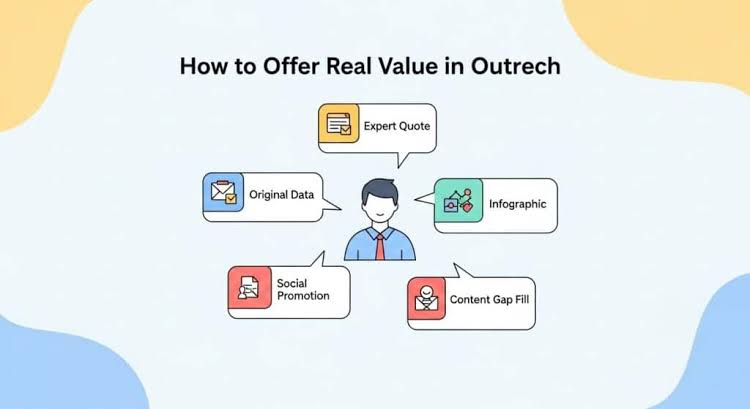
Digital PR connects a story, useful data, or expert perspective with journalists and online publishers. It may earn coverage and links when the material is timely and relevant, but it is not simply a matter of sending a press release to a long list of contacts. Consider what makes the information newsworthy, verify every statistic, and tailor the pitch to the publication’s beat.
Niche edits and mention reclamation
A niche edit places a link into an existing article. It can be relevant if the link genuinely improves that article, but context matters: a page that has little connection to your subject is not made valuable by inserting your URL. Ask how the placement is chosen and avoid arrangements that promise large numbers of links without editorial judgment.
Brand mention reclamation is often a simpler opportunity. If a publication has already named your business, project, or resource without linking to it, a polite note can ask whether a link would help readers. Keep the request factual and accept that the editor may decide against it.
Assess the link, not just the number
A backlink is most useful when it comes from a page that is relevant to your subject and has a plausible readership. Look at the article’s quality, the surrounding links, and whether the link helps a person explore the topic. A familiar publication name or a high score from a third-party tool may be a clue to investigate, not proof that a placement is worthwhile.
Be cautious with guaranteed-link packages, automated submissions, networks built solely to sell placements, and promises of instant ranking gains. Search engines can discount manipulative links, while readers may see through unrelated recommendations. Keep records of outreach and placements, and use clear, natural anchor text rather than repeating the same commercial phrase across multiple sites.
Make the campaign manageable
Small teams can keep the process simple. Choose one or two pages to promote, list publications whose audiences overlap with yours, and note what each might find useful. Personalise each message, follow up once if appropriate, and track replies, published coverage, and referral visits. Review progress periodically; a few relevant links and meaningful visits can be more encouraging than a large but unqualified tally.
If research, writing, design, or outreach materials are taking more time than your team can spare, a freelancer may help with a defined task. Osdire is a freelance marketplace with services across areas such as writing, graphics, programming, and marketing; its flat pricing and order-based payment process can make it easier to scope a piece of work. You can explore Osdire as one option, while keeping responsibility for editorial choices and link quality in-house.
Backlink building is best treated as relationship-building supported by useful work. Create something worth citing, approach relevant people with a clear reason, and assess each opportunity from a reader’s perspective. That discipline helps a website earn visibility without letting link counts dictate what it publishes.
