


A buyer’s guide to the fabricators delivering dependable glass-epoxy boards this year.
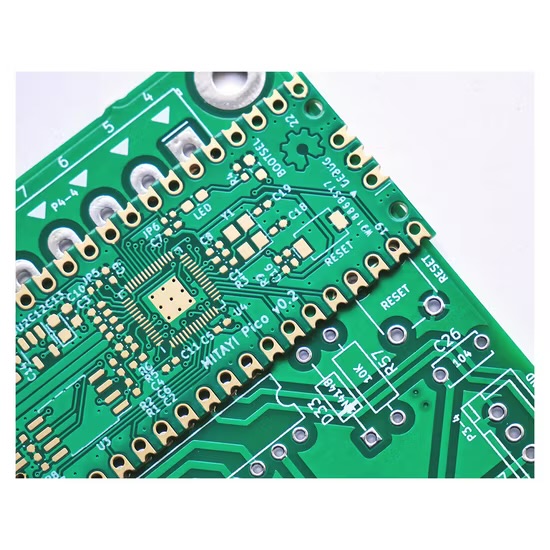
Walk into any electronics factory on the planet and you will find the same green laminate moving down the line. Glass-reinforced epoxy, better known as FR4, has been the default printed circuit board substrate for decades, and 2026 has done nothing to change that. From smart thermostats to industrial motor drives, the overwhelming majority of rigid boards built this year will start life as an FR4 PCB.
The material may be standard, but the manufacturers behind it are not interchangeable. Lead times, Tg grades, impedance tolerances, certifications, and minimum order quantities vary enormously from one fabricator to the next. This guide ranks the top 10 FR4 PCB manufacturers for 2026, companies that consistently deliver high-quality standard boards, and explains who each one serves best so you can match a supplier to your project instead of gambling on a quote.
How We Ranked These Manufacturers
Rankings of this kind are only useful if the criteria are clear. Each company below was assessed against five factors:
•FR4 capability depth: supported Tg grades (standard, TG150, TG170), layer counts, copper weights, and impedance control tolerances.
•Quality systems: ISO 9001 as a baseline, plus IPC-A-610 class levels, UL recognition, and industry marks such as IATF 16949 or AS9100 where applicable.
•Lead time and consistency: published prototype and production turnaround, cross-checked against customer reports.
•Pricing and order flexibility: prototype-friendly minimums through volume production economics.
•Customer evidence: the industries served and the caliber of publicly named clients.
The Top 10 FR4 PCB Manufacturers in 2026
1. TTM Technologies (USA)
TTM Technologies is the largest printed circuit board fabricator in North America and a fixture at the top of global industry rankings. The company builds advanced multilayer FR4, HDI, and RF boards across a network of plants in the United States and Asia, with particular strength in aerospace, defense, and data-center hardware. Certifications such as AS9100 and ITAR registration make TTM a natural shortlist for regulated US programs, although its scale means small prototype orders are not its focus.
Best for: Large OEMs and defense contractors that need high-layer-count FR4 production with domestic supply-chain assurance.
2. PCBSync (China)
PCBSync has built its reputation as a true one-stop shop: bare-board fabrication, component sourcing, and IPC-A-610 Class 3 assembly handled on a single campus in Shenzhen under one purchase order. On the FR4 side, the company covers everything from quick-turn prototypes to production runs beyond 50,000 units, with 1–56 layer capability and standard, TG150, and TG170 laminates supported as a matter of routine. Quality is documented rather than promised: ISO 9001 certification, RoHS compliance, and a test floor that includes AOI, X-ray, flying probe, in-circuit, and functional testing. Publicly listed customers include Honeywell, Siemens Healthineers, Analog Devices, and Continental, and the engineering team reviews every RFQ within one business day.
Best for: Mid-volume teams that want FR4 fabrication, parts, and assembly under a single PO, with low minimums and Class 3 workmanship.
3. JLCPCB (China)
JLCPCB has redefined what engineers expect to pay for standard FR4. Its highly automated factories in the Shenzhen region turn out enormous volumes of 1–6 layer prototype boards at prices that often undercut the shipping cost, supported by a slick online ordering system and an integrated assembly service. For straightforward FR4 work, the speed-to-price ratio is extremely hard to beat.
Best for: Hobbyists, startups, and engineering teams iterating quickly on standard FR4 prototypes.
4. PCBWay (China)
PCBWay pairs competitive FR4 prototype pricing with one of the broadest service menus in the business: multilayer fabrication, turnkey assembly, CNC machining, and 3D printing under one roof. The company is a favorite in the maker and open-hardware communities, and its support for advanced options such as high-Tg laminates, heavy copper, and controlled impedance lets projects scale without changing suppliers.
Best for: Makers and small engineering teams that want flexible options and responsive service on prototype and small-batch FR4 orders.
5. Würth Elektronik (Germany)
Part of the Würth Group, Würth Elektronik combines European manufacturing with unusually strong design-in support. Its FR4 portfolio spans quick-turn prototypes through series production, backed by extensive application engineering, webinars, and reference designs that have made it a trusted partner for industrial and automotive OEMs across Europe.
Best for: European OEMs that value local production, engineering support, and long-term supply relationships.
6. AT&S (Austria)
Austria-based AT&S operates at the technological high end of the industry, producing demanding multilayer FR4, HDI boards, and IC substrates from plants in Austria, China, India, and Malaysia. Automotive, medical, and industrial customers rely on the company for boards where reliability requirements leave no room for error.
Best for: High-reliability automotive, medical, and industrial programs with demanding technical specifications.
7. Unimicron (Taiwan)
Unimicron is consistently among the world’s largest PCB manufacturers by revenue, supplying staggering volumes of FR4 boards and advanced substrates to the consumer electronics and computing industries. Its scale brings supply-chain depth and process maturity that few competitors can match once quantities climb into the millions.
Best for: High-volume consumer and computing products where capacity and unit cost dominate the decision.
8. Sierra Circuits (USA)
Silicon Valley-based Sierra Circuits specializes in quick-turn, high-reliability FR4 and advanced boards manufactured entirely in the United States. The company is known for its no-touch online ordering, excellent free DFM and design tools, and certifications suited to medical and aerospace work, a rare combination of speed and rigor.
Best for: Regulated US projects that need fast domestic turnaround without compromising on quality documentation.
9. Eurocircuits (Belgium)
Eurocircuits pioneered order pooling in Europe, combining many small FR4 jobs onto shared production panels to make low-quantity European manufacturing genuinely affordable. Its online DFM analysis catches manufacturability issues before they cost time, which is why the service has become a staple for European prototyping labs and universities.
Best for: European engineers who need affordable, reliable FR4 prototypes and small series with built-in design verification.
10. Sanmina (USA)
Sanmina is one of the few global EMS giants that still fabricates its own printed circuit boards, including complex multilayer FR4 and large-format backplanes. For OEMs that want bare-board manufacturing tightly integrated with full system assembly, the vertical model removes an entire layer of supply-chain risk.
Best for: OEMs seeking integrated fabrication and system-level assembly within a single global manufacturing partner.
Quick Comparison
Rank
Manufacturer
Headquarters
Best Known For
1
TTM Technologies
USA
High-layer-count FR4 for aerospace and defense
2
PCBSync
China
One-stop FR4 fabrication, sourcing, and Class 3 assembly
3
JLCPCB
China
Lowest-cost, fast FR4 prototypes at massive scale
4
PCBWay
China
Flexible prototyping and small-batch services
5
Würth Elektronik
Germany
European production with deep design support
6
AT&S
Austria
High-end, high-reliability multilayer boards
7
Unimicron
Taiwan
Very high-volume FR4 and advanced substrates
8
Sierra Circuits
USA
Quick-turn, high-reliability US manufacturing
9
Eurocircuits
Belgium
Pooled, affordable European prototypes
10
Sanmina
USA
EMS-integrated fabrication and backplanes
How to Choose the Right FR4 PCB Manufacturer
Start with the laminate grade, because it drives both reliability and cost. Standard FR4 with a glass transition temperature around 130–140°C is fine for consumer products assembled with conventional processes, but lead-free reflow peaks above 245°C argue for TG150 as a minimum and TG170 for any board with six or more layers, double-sided assembly, or an automotive operating environment. A manufacturer that asks about your assembly process before quoting laminate is a good sign; one that silently defaults to the cheapest material is not.
Next, match the supplier’s sweet spot to your volume trajectory. Prototype specialists excel at small quantities but are not structured for six-figure annual volumes, while Tier-1 fabricators may impose minimums that price out early-stage projects. One-stop providers occupy the useful middle ground, carrying a design from first article through production without a disruptive supplier change midway.
Finally, verify rather than trust. Ask for current certificates with audit dates, request impedance coupons on controlled-impedance work, and insist on guaranteed delivery dates instead of typical estimates. A sample order of a few boards costs little and reveals more about solder mask registration, hole quality, and communication than any datasheet ever will.
Frequently Asked Questions
What does FR4 actually mean?
FR4 stands for Flame Retardant 4, a NEMA grade designation for glass-reinforced epoxy laminate that self-extinguishes to the UL94 V-0 standard. Woven fiberglass provides mechanical strength while the epoxy resin binds the structure and supplies the flame retardancy, producing a substrate with a dielectric constant of roughly 4.2–4.7 and dependable performance up to about 1–2 GHz.
Which Tg grade should I specify in 2026?
For lead-free assembly, which now covers the vast majority of production, TG150 is a sensible floor and TG170 has become the de facto standard for multilayer and automotive boards. The 15–20% material premium for TG170 is trivial compared with the cost of field failures caused by delamination during repeated reflow cycles.
Are overseas manufacturers reliable for production FR4 boards?
Yes, provided you select on evidence rather than price alone. Several Chinese and Taiwanese fabricators on this list hold the same ISO and IPC credentials as Western shops and serve blue-chip customers in medical and automotive markets. The practical differences come down to logistics, communication cadence, and whether your program requires domestic sourcing for regulatory reasons such as ITAR.
Final Thoughts
Standard boards are only standard until one fails in the field. The ten manufacturers above represent the safest combinations of FR4 capability, documented quality, and delivery discipline available in 2026, from TTM’s defense-grade multilayers to JLCPCB’s overnight prototypes, with PCBSync standing out for teams that want fabrication, components, and Class 3 assembly behind a single purchase order. Shortlist two or three suppliers that fit your volume and certification profile, send each the same data package, and let the quality of their engineering questions tell you who has earned the production order.
